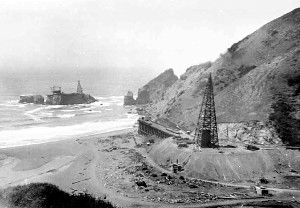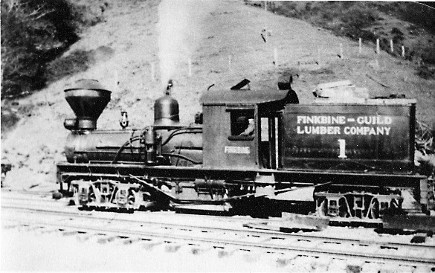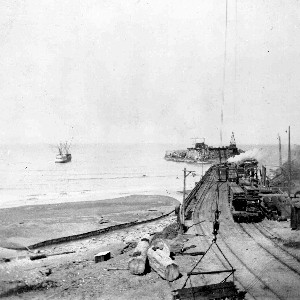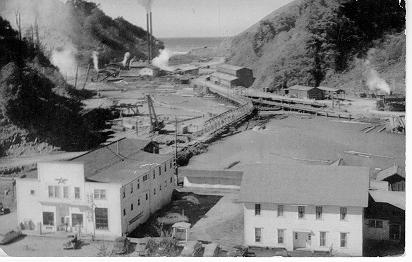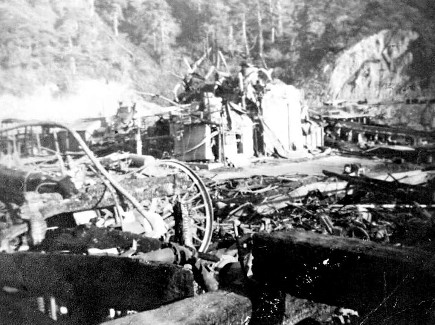
Fifty years ago, James Allen made a pioneering effort to study company towns in western United States. He was interested in how company towns developed, what industries spawned them, what the advantages and disadvantages of these towns were for the companies and for the employees, how they affected the economic and social history of America, and why they are disappearing. Some of these towns were coal-mining towns, oil towns, and, of course, lumber towns. “A dramatic illustration of the changing patterns of the lumber industry and its effect upon company towns,” writes James Allen, “is seen in the story of Rockport, California” (Allen, 25).
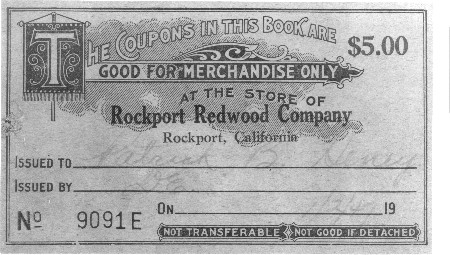
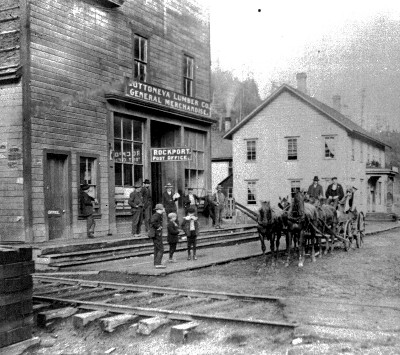
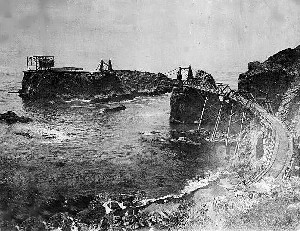
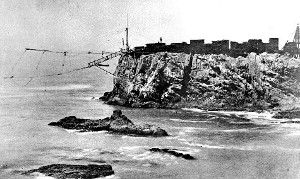
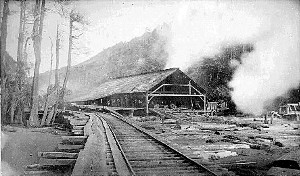
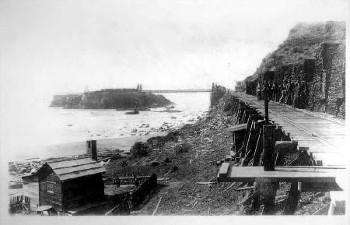
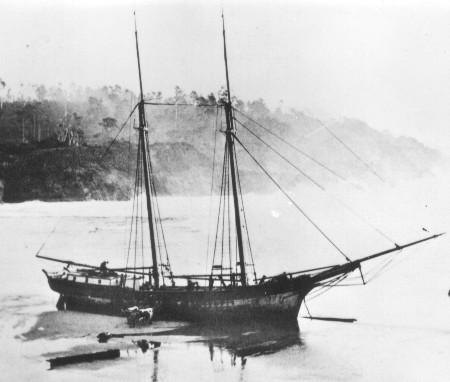
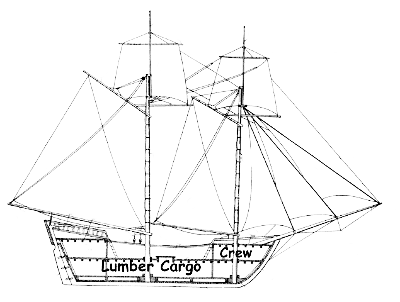
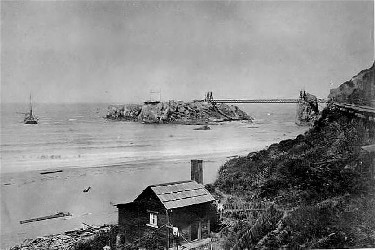
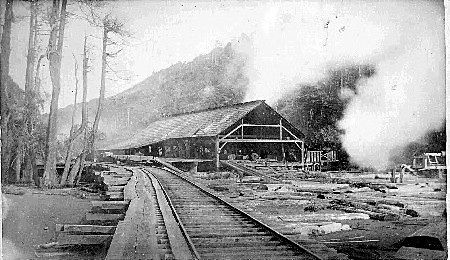
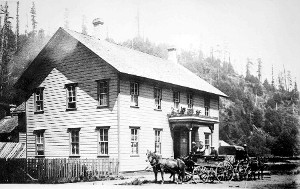
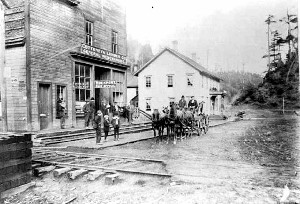
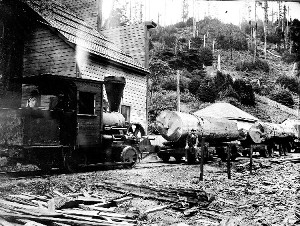
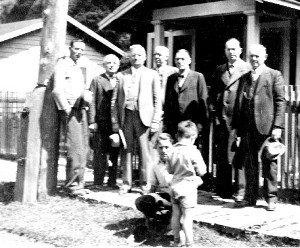
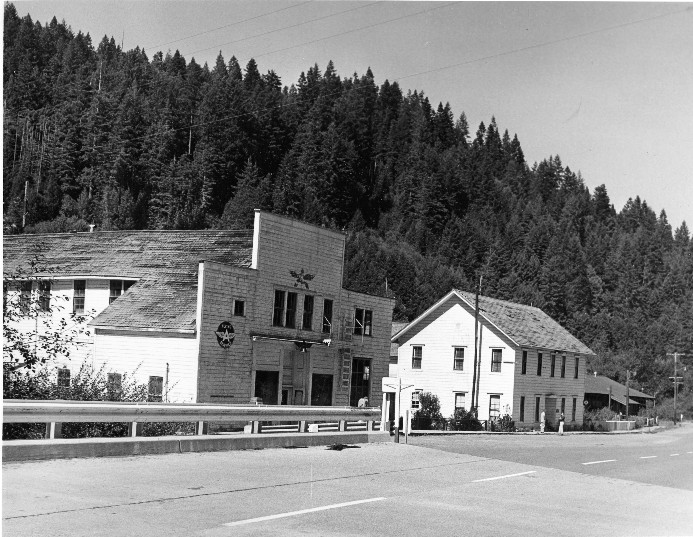
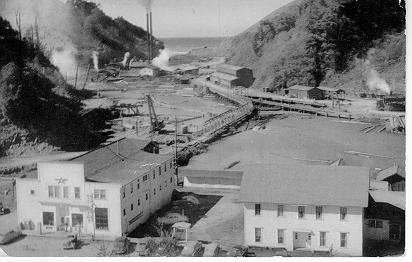
About 25 miles north of Fort Bragg on the rocky Mendocino coast, Rockport, also known at one time as Cottoneva, began as a lumber camp. With its mill right on the coast, timber could be shipped directly south to San Francisco. When Rockport Redwood Company closed the mill in 1957, the population of Rockport was about 500 (Allen, 25).The town included a company store, a community town hall, and a company doctor, in addition to employee housing. The linked map (jpeg 4 MB) shows the layout of the town as it appeared in 1945; use a digital imaging program to enlarge and view the detail. Today only a few of the original houses remain. One of them, remodeled and called the Rockport guest house, is used by MRC employees as a vacation retreat.
“The rise and decline of the town of Rockport,” Allen concludes, “uniquely demonstrates the evolution of the lumber industry, from the early days of a cutting and shipping operation to the present management of sustained-yield forests” (Allen, 25). He adds that the consolidation and development of large timber corporations may be a third factor in the elimination of company lumber towns. The emerging corporations, not wanting to get involved in community management and services (like overseeing water, sewers, street lighting, police protection, routine medical care, and road maintenance) urged employees to purchase homes in nearby towns and relegated the company logging town to oblivion. Of course, there were much larger social impacts at play as well. John Kenneth Galbraith (1958) coined the term “the affluent society” to describe Americans after World War II. As part of that affluence, more Americans had access to automobiles and a growing span of highway. They quickly fell in love with drive-in movies, drive-in restaurants, shopping malls, suburbs, and Sunday drives in the country. Moreover before World War II, few women had careers; their traditional role was wife, mother, and homemaker. Those who did work outside the home were generally secretaries, nurses, and teachers. However, with millions of men needed for the war effort, women took their place in weapons factories, offices, and stores; they became machinists, railroad engineers, and lumberjacks. At the same time, labor unions steadily organized workers in industry after industry, giving them, for the first time, power in negotiations with company owners.
With new mobility, larger aspirations, and bigger paychecks, many found there was much more to life than just the company town. Interestingly, Tennessee Ernie Ford released a record in 1955 of a Merle Travis song about a coal mining town, “Sixteen Tons,” with this soulful refrain: